Costs vary depending on the size of the room and the level of soundproofing required. As a rough guide:
We offer free technical consultations to help you find the most cost-effective solution for your situation.
Yes. Slim acoustic underlays like our 6mm Impact Mat can significantly reduce impact noise while adding minimal height. For more demanding situations, a 15mm system combining resilient layer and acoustic board offers excellent results.
The key is choosing materials with high density-to-thickness ratios. Our technical team can recommend the thinnest effective solution for your specific noise problem.
Airborne noise travels through the air before hitting a surface — examples include voices, music, and TV sound. Impact noise is created when an object physically strikes a surface, such as footsteps on a floor or a door slamming.
Each type requires a different treatment approach. Airborne noise is best tackled with mass and decoupling, while impact noise needs resilient underlays and isolation to absorb the vibration energy before it enters the structure.
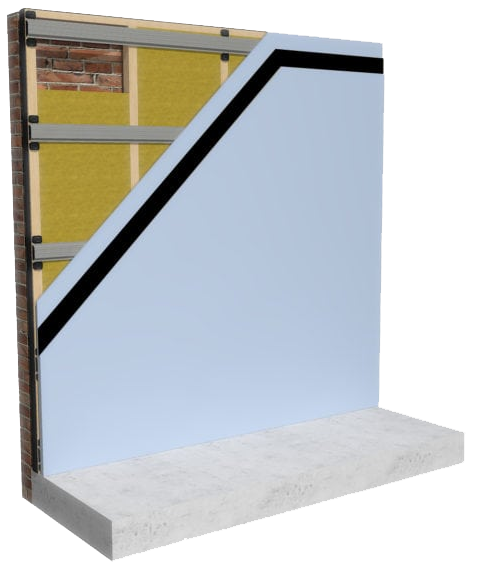
Standard plasterboard adds a limited amount of mass to the wall, so does not stop sound transfer effectively. Without decoupling, damping and adding high levels of mass, sound vibrations still pass through the wall. Proper soundproofing systems include:
Different types of mass also absorb different sound frequencies. Simply adding more of the same material will not improve the sound blocking capabilities of the wall.
Yes, but the type of panel matters. Acoustic foam panels reduce echo and reverberation within a room, but they do very little to block sound from passing through walls.
For genuine sound blocking, you need dense, mass-loaded panels such as acoustic plasterboard or barrier mats. These work by adding mass to the structure, which reduces the amount of sound energy that can pass through.
The most effective way to soundproof a wall is to add mass, decouple the structure, and use damping materials. A typical solution involves:
The key is to break the direct connection between the existing wall and the new layer, which prevents sound vibrations from transferring through.